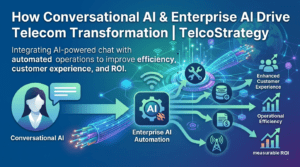
In an era where customer expectations are higher than ever, telecommunications companies must go beyond managing network uptime and billing accuracy. Today’s telecom customers demand fast, personalized, and seamless interactions across all support channels — from voice calls to mobile apps and chatbots. To stay competitive and lead in customer satisfaction, telecom operators are modernizing their customer service ecosystems with advanced solutions such as VoIP customer service, AI call routing, and cost-effective cloud-native platforms.
This article examines how modern telecom technologies are reshaping customer service — not just to respond faster, but to deliver smarter, predictive, and customer-centric experiences that build loyalty and reduce churn.
Why Customer Service Modernization Matters in Telecom
Research shows that a telecom provider’s ability to respond quickly and meet customer expectations plays a central role in service quality and loyalty. In particular, responsiveness — the ability to address customer needs rapidly and accurately — is one of the strongest drivers of perceived service quality and long-term customer loyalty in telecom markets. (ScienceDirect)
But legacy tools like traditional phone systems, manual call routing, and siloed support channels are no longer sufficient in a digital-first world. Customers expect 24/7 access, personalized interactions, and seamless journeys across channels — challenges that modern telecom solutions are uniquely positioned to address.
1. AI and Intelligent Automation: Precision at Scale
Artificial Intelligence (AI) is rapidly becoming a cornerstone of modern telecom customer service. AI and automation help carriers not only respond faster, but also predict customer needs before they escalate. This is transforming customer care from reactive support into proactive engagement.
Smarter Call Routing and Issue Resolution
AI-powered systems can analyze the reason for a customer call and route it to the right agent or automation workflow almost instantly. This cuts down on wait times and reduces unnecessary transfers, significantly improving first-contact resolution. (Microsoft)
Leading telecom companies are already embracing this trend. For example, one major global operator uses generative AI to predict why customers are calling and matches them with the most suitable service agents — helping retain tens of thousands of customers each year. (Reuters)
Support Agents With AI Assistant Tools
Rather than replacing human agents, modern AI tools act as intelligent companions for customer service staff. These tools surface real-time recommendations, context from previous interactions, and instant suggestions based on deep historical data. This enables agents to resolve issues more intelligently and quickly, leading to higher satisfaction and stronger customer experience scores. (Microsoft)
2. VoIP and Cloud Contact Center Solutions
Cloud-based telephony and VoIP systems have become foundational for scalable and resilient customer service.
VoIP Customer Service That Scales
By shifting voice communication to the cloud, telecom providers can scale call handling dynamically during peak times, support remote workforces, and eliminate expensive hardware dependencies. Intelligent call routing and CRM integration enhance every customer interaction by giving agents instant access to context and history. (The Telephony Co)
Cloud-native solutions also deliver smart analytics and performance insights — helping managers monitor customer satisfaction metrics like average handle time, first-call resolution, and queue performance across every channel. (Modern Telecom)
Cost-Effective Cloud-Native Benefits
Cloud adoption isn’t just about technology modernization — it’s also a cost-effective strategy. Telecom operators leveraging cloud platforms can reduce infrastructure overhead while improving scaling capabilities and delivering more resilient customer service experiences.
3. Omnichannel Support and Unified Customer Journeys
Today’s customers don’t just call support — they expect to engage via chatbots, mobile apps, SMS, email, and social platforms. Omnichannel contact center solutions bring all these experiences into one unified view, enabling agents to provide consistent, personalized responses across every touchpoint. (Modern Telecom)
This means a customer can start a support request in an app, follow up by email, and complete resolution via a voice call — all without repeating information, because the platform retains context throughout the journey.
4. Predictive Customer Engagement
Modern telecom platforms can now anticipate customer issues before they escalate. By using historical behavior and real-time analytics, operators can send proactive notifications — such as billing reminders, service alerts, or network issue updates — before customers reach out. This helps reduce frustration and enhances the overall support experience. (Cebod Telecom)
Such proactive engagement shifts support from reactive problem solving to customer empowerment, reinforcing trust and strengthening loyalty.
5. Human + Machine: The Ideal Support Model
While automation and AI drive efficiency, the human element remains essential. Modern customer service strategies combine automated tools with skilled agents — enabling human teams to focus on complex inquiries while AI handles routine tasks. This hybrid model strengthens both operational efficiency and customer satisfaction.
Talk about transforming roles: service agents increasingly become customer advocates and consultants rather than just order takers.
Bringing It All Together
To improve customer service telecom operations at scale, forward-thinking companies are embracing a blend of cloud-native architectures, AI-driven automation, VoIP customer service innovations, and omnichannel engagement strategies. These investments don’t just reduce costs — they elevate customer experience, build deeper brand loyalty, and unlock competitive advantage in an increasingly crowded marketplace.
For organizations seeking comprehensive digital transformation — from core networks to customer engagement — partnering with a trusted telecom consultancy can clarify strategic priorities, ensure seamless integration across platforms, and accelerate value creation.
Frequently Asked Questions
How can AI be used to improve customer service?
AI transforms support from reactive to proactive. Key applications include:
- Intelligent Routing: Automatically matching customers with the best-suited agent based on the issue's complexity.
- Chatbots & Virtual Assistants: Handling routine queries (billing, tracking) 24/7 to free up human agents.
- Predictive Analytics: Analyzing data to anticipate outages or issues before a customer even calls.
- Sentiment Analysis: Monitoring a customer’s tone in real-time to alert managers if an interaction is escalating.
How can we improve telecommunication services?
Improving telecom services requires a blend of infrastructure and digital transformation. Modern customer service also benefits from quality telecom support services that protect data and build trust at every interaction. Additionally:
- Adopt Cloud-Native Platforms: Moving to the cloud increases scalability and reduces hardware downtime.
- Prioritize Omnichannel Support: Ensuring customers can switch between an app, SMS, and voice calls without losing their conversation history.
- Invest in 5G & Network Edge: Reducing latency and increasing speed for a more reliable user experience.
- Proactive Communication: Sending automated alerts regarding maintenance or data usage limits.
What are the 4 P's that improve customer service?
While the traditional marketing 4 P's are Product, Price, Place, and Promotion, the Customer Service 4 P's are:
- Promptness: Reducing wait times and increasing first-contact resolution.
- Politeness: Ensuring a respectful, empathetic, and professional tone.
- Professionalism: Providing accurate information and expert knowledge.
- Personalization: Tailoring the experience using customer data and history.
How to improve telephone customer service?
Even in a digital world, voice remains vital. You can improve it by integrating a managed cyber security service to protect caller privacy. Other methods include:
- Using VoIP Systems: Leveraging high-definition voice quality and flexible call-handling features.
- CRM Integration: Giving agents instant access to a caller's profile the moment the phone rings.
- Active Listening Training: Coaching agents to summarize issues and validate customer feelings.
- Shortening IVR Menus: Simplifying "Press 1 for..." menus so customers reach a human or a solution faster.