
Telecom

Outbound AI Sales Agents: Hype or Real Pipeline?
TelcoStrategy | Sales & Revenue Advisory Outbound AI Sales Agents: Hype or Real Pipeline? What middle market sales executives need to know in 2025 There is a moment in almost

TelcoStrategy | Sales & Revenue Advisory Outbound AI Sales Agents: Hype or Real Pipeline? What middle market sales executives need to know in 2025 There is a moment in almost

Conversational AI Strategy | Vendor Comparison Observe.ai vs. Kore.ai vs. Yellow.ai vs. Cognigy: Which Buyer Are They Best For? A vendor-neutral guide for sales executives and middle-market CEOs navigating one

1. Executive Summary Enterprise telecom environments in the United States have reached a critical inflection point. Organizations are managing increasingly complex networks across hybrid infrastructures while facing persistent cost pressures,

1. Executive Summary Enterprise networks are undergoing a structural transformation driven by cloud adoption, distributed workforces, and escalating cost pressures. Legacy WAN architectures—primarily MPLS-based—are increasingly misaligned with modern enterprise demands
1. Executive Summary Enterprise networks are undergoing a structural transformation driven by cloud acceleration, distributed workforces, and escalating performance expectations. Traditional architectures—designed for centralized environments—are no longer aligned with modern

1. Executive Summary Enterprise connectivity is undergoing a structural transformation. Legacy WAN architectures—anchored in MPLS, static routing, and centralized control—are increasingly misaligned with the demands of cloud-first, distributed enterprises. As
1. Executive Summary Enterprise networking is undergoing a structural shift. Traditional MPLS-based architectures—long considered the gold standard for reliability—are increasingly misaligned with modern digital demands. As organizations adopt cloud-first strategies,
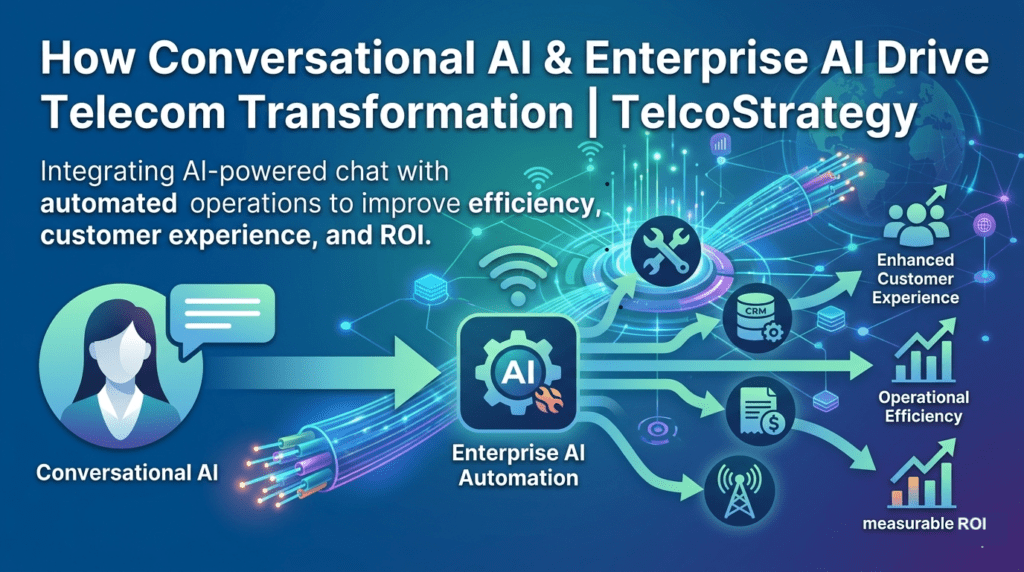
1. Executive Summary Telecommunications enterprises are entering a decisive phase where operational complexity, customer expectations, and cost pressures are converging at scale. Traditional automation—rule-based, siloed, and reactive—has reached its limits.
1. Executive Summary Telecommunications spending has become one of the most under-optimized cost centers in modern enterprises. Despite advances in digital transformation, many organizations continue to operate with fragmented vendor

Artificial Intelligence (AI) is no longer a future ambition for the telecommunications industry — it is an operational reality. From AI-driven chatbots to predictive analytics, telecom operators are using AI
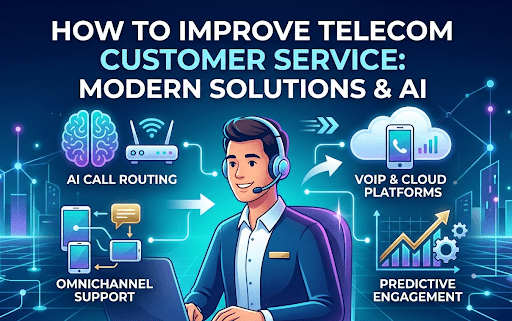
In an era where customer expectations are higher than ever, telecommunications companies must go beyond managing network uptime and billing accuracy. Today’s telecom customers demand fast, personalized, and seamless interactions
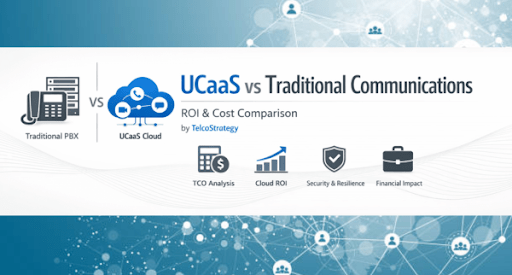
By TelcoStrategy For years, enterprise communications were treated as infrastructure—necessary, expensive, and largely static. PBX systems sat in server rooms. Carrier contracts renewed on autopilot. And cost optimization was reactive.